Why Some Pools Struggle Even With Perfect Test Results

Robert Lowrey-dufour • February 20, 2026

Most pool owners trust what the test strip says.

If chlorine reads 3–4 ppm and pH looks acceptable, the water must be balanced.

But pool chemistry is not just about individual numbers.

It’s about how those numbers interact.

We regularly see pools that test “perfect” and still develop algae, cloudy water, or heavy chlorine odor. In many cases, the issue is not low chlorine.

It is chlorine efficiency.


Chlorine Has Two Forms — And They Are Not Equal

When chlorine is added to water, it forms hypochlorous acid (HOCl). This is the fast-acting sanitizer responsible for killing bacteria and algae.

However, hypochlorous acid partially converts into another form called hypochlorite ion (OCl⁻).

Both forms are measured together as “free chlorine.”

But they do not perform the same.

HOCl is dramatically more effective than OCl⁻.

Which form dominates depends largely on pH.


The pH Factor Most Pools Overlook

Hypochlorous acid has a pKa of approximately 7.5 in pool water.

That means around pH 7.5, chlorine exists in roughly equal parts strong and weak forms.

As pH rises, more chlorine shifts into the weaker hypochlorite form.

For example:

• At pH 7.2 → roughly two-thirds of chlorine is in its stronger form

• At pH 7.8 → less than one-third remains in that stronger form

The total chlorine reading does not change.

But its effectiveness does.

This is why a pool can show 4 ppm of chlorine — and still struggle with algae.


Why “Just Add More Chlorine” Doesn’t Always Work

When pH is high, adding more chlorine simply increases the amount of weaker sanitizer.

This leads to:

• Higher chlorine demand

• More chloramine formation

• Increased byproducts

• Greater pH instability

Over time, the pool becomes chemically reactive instead of stable.

The solution is not more chlorine.

It is better balance.


Water Is Always Seeking Equilibrium

Water is not passive. It is constantly moving toward equilibrium.

Aeration drives off carbon dioxide, which raises pH.

Salt chlorine generators produce sodium hydroxide, which also increases pH locally.

Even liquid chlorine has a temporarily alkaline effect.

Without active management, pH slowly climbs — and chlorine efficiency declines.

This happens even when everything “looks fine.”


What True Balance Looks Like

Balanced water means chlorine, pH, alkalinity, and calcium hardness are working together — not fighting each other.

When properly managed:

• Chlorine sanitizes faster

• Less chlorine is required

• Combined chlorine remains low

• Water clarity improves

• Equipment experiences less scale or corrosion stress

This is not about chasing numbers.

It is about maintaining chemical stability.


Final Thought

Perfect test results do not guarantee optimal performance.

The goal is not simply measurable chlorine.

It is effective chlorine.

When chemistry is managed correctly beneath the surface, water stays clearer, more predictable, and less prone to recurring problems.

Clear water can be misleading.

Stable water is intentional.

And that difference matters over time.

By Robert Lowrey-dufour February 18, 2026
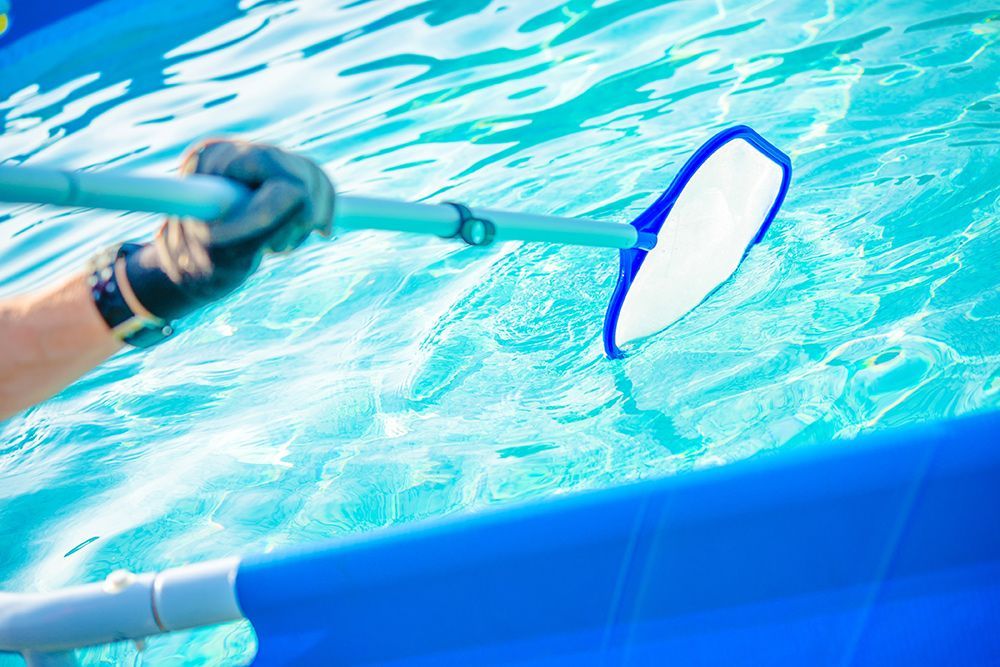
Most pool owners believe chlorine is a simple on-off switch: either there is chlorine in the water or there isn’t. In reality, chlorine is part of a dynamic chemical system that changes continuously based on pH, temperature, and dissolved compounds. If pH is not controlled, even a perfectly dosed pool can become unsafe, cloudy, or algae-prone — despite having “normal” chlorine readings. This is not a theory. It is governed by chemical equilibrium. Chlorine Does Not Exist as One Thing When chlorine is added to water (whether as liquid chlorine, tablets, or salt-generated chlorine), it does not stay in its original form. It immediately reacts with water to form hypochlorous acid: Cl₂ + H₂O → HOCl + H⁺ + Cl⁻ Hypochlorous acid (HOCl) is the powerful disinfectant that kills bacteria, viruses, and algae. However, HOCl does not stay intact — it partially dissociates into hypochlorite ion (OCl⁻): HOCl ⇌ H⁺ + OCl⁻ These two forms behave very differently: Form Effectiveness HOCl Extremely fast and powerful sanitizer OCl⁻ Much slower, weaker oxidizer Both are measured together as “free chlorine,” but only HOCl does most of the actual sanitizing work. Non-technical summary: Even if your test strip shows enough chlorine, the wrong pH can make most of it stop working. When pH drifts too high or too low, chlorine loses its ability to kill algae and bacteria. That’s why pools can turn cloudy or green even when chlorine numbers look “normal.” Why pH Controls Chlorine Strength The balance between HOCl and OCl⁻ is governed by the acid-base equilibrium of hypochlorous acid. This equilibrium has a pKa of approximately 7.53 in typical pool water. Using the Henderson–Hasselbalch equation: pH = pKa + log([OCl⁻] / [HOCl]) we can calculate how chlorine species shift as pH changes. Below pH 7.53, HOCl dominates. Above pH 7.53, OCl⁻ dominates. As pH rises, chlorine becomes chemically weaker — even though test kits still show the same ppm. What This Means in Real Pools pH | % HOCl | % OCl⁻ 7.2 | ~66% | ~34% 7.5 | ~48% | ~52% 7.8 | ~28% | ~72% 8.0 | ~20% | ~80% If a pool has 4 ppm of free chlorine: • At pH 7.2 → about 2.6 ppm is powerful HOCl • At pH 7.8 → only 1.1 ppm is HOCl That is a 58% loss in disinfecting power without losing any chlorine on a test kit. This explains why high-pH pools often have: Persistent algae Strong chlorine odor Cloudy water after shocking Eye and skin irritation The chlorine is present — but chemically inefficient. Why Adding More Chlorine Doesn’t Fix the Root Problem When pH is high, most chlorine converts into OCl⁻. Adding more chlorine simply increases the amount of weak sanitizer. This creates a loop: pH rises Chlorine becomes weaker Algae survives More chlorine is added Byproducts increase pH becomes unstable chlorine is added, pH initially rises. as chlorine is consumed, acidic byproducts are created that push pH back dow creates a continuous up-and-down cycle that makes pH Without pH control, chlorine becomes expensive and unreliable. Why pH Naturally Drifts Upward pH rises due to: Aeration from spas, waterfalls, and return jets Carbon dioxide loss to the air High alkalinity buffering Liquid chlorine additions (sodium hypochlorite is alkaline) Salt cells (they generate sodium hydroxide during chlorine production) This means pools drift out of balance unless actively managed. Why Stabilized pH Means Stronger Chlorine Keeping pH in the optimal range (around 7.4–7.6) shifts chlorine toward hypochlorous acid — the most powerful form. This means: Faster sanitation Less chlorine required Fewer chloramines Clearer water Less algae We don’t use more chemicals — we make them work smarter. Preventing Problems Instead of Chasing Them By controlling pH and chlorine together, we prevent: Repeated algae Constant shocking Chlorine smell Cloudiness Surface damage Equipment corrosion Most pool problems aren’t caused by “low chlorine.” They’re caused by inefficient chlorine. The Pool Partners Difference We don’t just clean pools — we help keep your water feeling great and staying trouble-free. By keeping chlorine and pH working together, we make sure your pool stays: • More stable • More comfortable to swim in • Easier to take care of • Less likely to run into problems That means clearer water, fewer chemicals, and fewer surprises for you.
By Robert Lowrey-dufour February 12, 2026
Most pool owners believe chlorine is a simple on-off switch: either there is chlorine in the water or there isn’t. In reality, chlorine is part of a dynamic chemical system that changes continuously based on pH, temperature, and dissolved compounds. If pH is not controlled, even a perfectly dosed pool can become unsafe, cloudy, or algae-prone — despite having “normal” chlorine readings. This is not a theory. It is governed by chemical equilibrium. Chlorine Does Not Exist as One Thing When chlorine is added to water (whether as liquid chlorine, tablets, or salt-generated chlorine), it does not stay in its original form. It immediately reacts with water to form hypochlorous acid: Cl₂ + H₂O → HOCl + H⁺ + Cl⁻ Hypochlorous acid (HOCl) is the powerful disinfectant that kills bacteria, viruses, and algae. However, HOCl does not stay intact — it partially dissociates into hypochlorite ion (OCl⁻): HOCl ⇌ H⁺ + OCl⁻ These two forms behave very differently: Form Effectiveness HOCl Extremely fast and powerful sanitizer OCl⁻ Much slower, weaker oxidizer Both are measured together as “free chlorine,” but only HOCl does most of the actual sanitizing work. Non-technical summary: Even if your test strip shows enough chlorine, the wrong pH can make most of it stop working. When pH drifts too high or too low, chlorine loses its ability to kill algae and bacteria. That’s why pools can turn cloudy or green even when chlorine numbers look “normal.” Why pH Controls Chlorine Strength The balance between HOCl and OCl⁻ is governed by the acid-base equilibrium of hypochlorous acid. This equilibrium has a pKa of approximately 7.53 in typical pool water. Using the Henderson–Hasselbalch equation: pH = pKa + log([OCl⁻] / [HOCl]) we can calculate how chlorine species shift as pH changes. Below pH 7.53, HOCl dominates. Above pH 7.53, OCl⁻ dominates. As pH rises, chlorine becomes chemically weaker — even though test kits still show the same ppm. What This Means in Real Pools pH | % HOCl | % OCl⁻ 7.2 | ~66% | ~34% 7.5 | ~48% | ~52% 7.8 | ~28% | ~72% 8.0 | ~20% | ~80% If a pool has 4 ppm of free chlorine: • At pH 7.2 → about 2.6 ppm is powerful HOCl • At pH 7.8 → only 1.1 ppm is HOCl That is a 58% loss in disinfecting power without losing any chlorine on a test kit. This explains why high-pH pools often have: Persistent algae Strong chlorine odor Cloudy water after shocking Eye and skin irritation The chlorine is present — but chemically inefficient. Why Adding More Chlorine Doesn’t Fix the Root Problem When pH is high, most chlorine converts into OCl⁻. Adding more chlorine simply increases the amount of weak sanitizer. This creates a loop: pH rises Chlorine becomes weaker Algae survives More chlorine is added Byproducts increase pH becomes unstable chlorine is added, pH initially rises. as chlorine is consumed, acidic byproducts are created that push pH back dow creates a continuous up-and-down cycle that makes pH Without pH control, chlorine becomes expensive and unreliable. Why pH Naturally Drifts Upward pH rises due to: Aeration from spas, waterfalls, and return jets Carbon dioxide loss to the air High alkalinity buffering Liquid chlorine additions (sodium hypochlorite is alkaline) Salt cells (they generate sodium hydroxide during chlorine production) This means pools drift out of balance unless actively managed. Why Stabilized pH Means Stronger Chlorine Keeping pH in the optimal range (around 7.4–7.6) shifts chlorine toward hypochlorous acid — the most powerful form. This means: Faster sanitation Less chlorine required Fewer chloramines Clearer water Less algae We don’t use more chemicals — we make them work smarter. Preventing Problems Instead of Chasing Them By controlling pH and chlorine together, we prevent: Repeated algae Constant shocking Chlorine smell Cloudiness Surface damage Equipment corrosion Most pool problems aren’t caused by “low chlorine.” They’re caused by inefficient chlorine. The Pool Partners Difference We don’t just clean pools — we help keep your water feeling great and staying trouble-free. By keeping chlorine and pH working together, we make sure your pool stays: • More stable • More comfortable to swim in • Easier to take care of • Less likely to run into problems That means clearer water, fewer chemicals, and fewer surprises for you.
By Robert Lowrey-dufour February 9, 2026
Most pool problems do not start with algae, cloudy water, or broken equipment — they start with unbalanced water chemistry. Water that is not chemically stable will always try to reach equilibrium, even if that means dissolving plaster, corroding metal, or forming scale inside your system. At Pool Partners LLC, we maintain pools using water chemistry principles, not guesswork. What Does “Balanced” Water Actually Mean? Balanced pool water is defined by the relationship between pH, alkalinity, calcium hardness, and temperature. These variables control whether water is: Aggressive (corrosive) Scaling (mineral-deposit forming) Or stable Water that is not in equilibrium will pull calcium from surfaces or push calcium out of solution — both of which cause damage. The Role of pH in Chlorine Effectiveness Chlorine’s ability to kill bacteria is controlled by pH. At pH 7.2, chlorine is roughly 65% active. At pH 8.0, chlorine is less than 20% active. This means a pool can test “proper chlorine” but still grow algae because the water chemistry prevents chlorine from working. This is why pH control is more important than simply adding more sanitizer. Why Alkalinity Controls Stability Total alkalinity acts as a buffer that resists rapid pH changes. When alkalinity is too low: pH fluctuates wildly Water becomes corrosive Plaster and metals begin to dissolve When alkalinity is too high: pH becomes difficult to adjust Scaling conditions develop Water clarity declines Stability matters more than exact numbers. Calcium Hardness and Surface Protection Pool water always seeks calcium equilibrium. If calcium is too low, it will pull it from: Plaster Grout Pebble finishes This causes etching and surface roughness. If calcium is too high, it forms: Scale on tile Blockages in heaters Reduced circulation Both outcomes are chemically predictable — not random. Why Pools Become Cloudy Cloudy water is not caused by “dirty water” — it is caused by: Poor filtration Improper pH Calcium precipitation Ineffective sanitizer Uncontrolled non sequestered or chelated metals. When water chemistry is unstable, microscopic particles cannot clump together and be filtered out. The Professional Approach to Water Balance At Pool Partners LLC, we do not chase test numbers. We manage water equilibrium by accounting for: Temperature pH Alkalinity Calcium Sanitizer Stabilizer When these are aligned, water becomes self-maintaining, clear, and safe. Why This Matters for Equipment and Cost Unbalanced water: Corrodes heaters Destroys seals Shortens pump life Blocks filters Increases chemical usage Balanced water: Extends equipment life Uses fewer chemicals Prevents surface damage Reduces long-term cost This Is What Pool Partners LLC Delivers We don’t just clean pools — we engineer water stability so your pool stays: Clear Comfortable Efficient And protected
By Engage Team February 9, 2026
The new season is a great reason to make and keep resolutions. Whether it’s eating right or cleaning out the garage, here are some tips for making and keeping resolutions.
By Engage Team February 9, 2026
There are so many good reasons to communicate with site visitors. Tell them about sales and new products or update them with tips and information.
By Engage Team February 9, 2026
Write about something you know. If you don’t know much about a specific topic that will interest your readers, invite an expert to write about it.